Robotics
Every robot, drone and person on one plan.
Robotics has long suffered from vendor siloing. Otonoma’s network orchestrates robots, drones, people and software from different vendors as one fleet — from warehouse floors to hotel corridors — designed and tested in simulation first, laid over the systems you already run, with people supervising the decisions that matter.
From our YouTube channel
See it run — in simulation first.
These are simulations and demos, many built with NVIDIA Omniverse (Otonoma is a registered NVIDIA development partner). They show how the network, working with agentic artificial intelligence (AI), plans and coordinates mixed fleets before anything touches a real floor. More on youtube.com/@theotonoma.
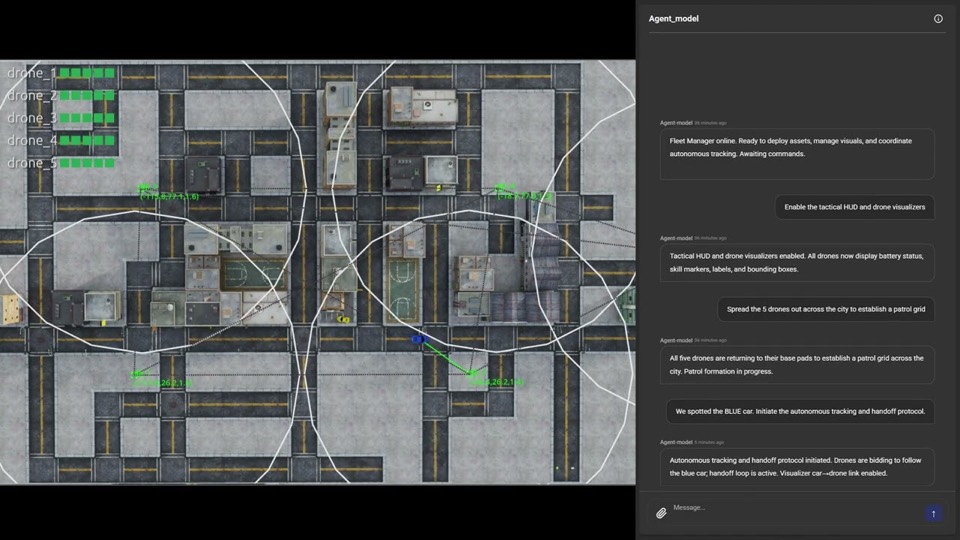
Autonomous tracking, swarming and routing
A simulated fleet tracks, swarms and routes as one team. Each vehicle is an actor on the network, and a shared plan coordinates them — not one pilot per machine.
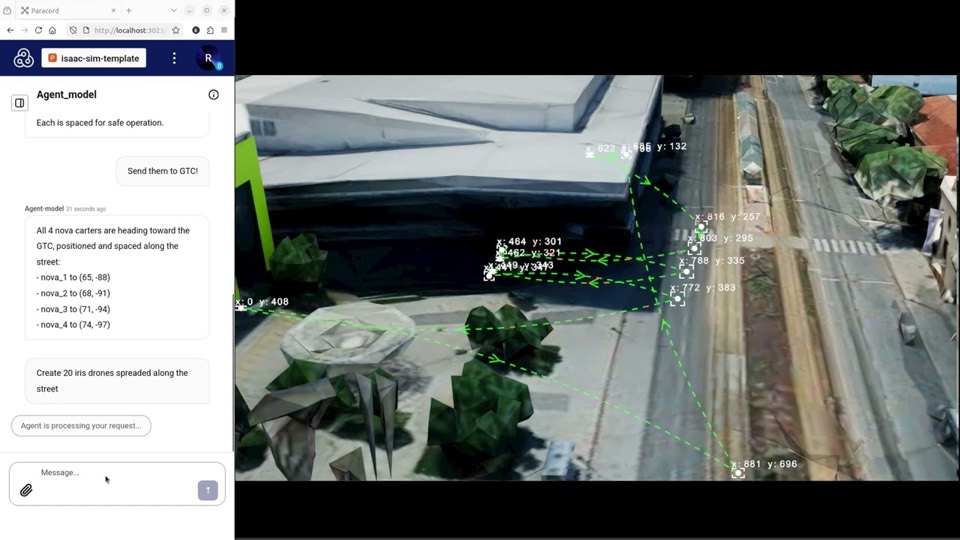
Robot “partners” at a conference we couldn’t attend
We couldn’t be at NVIDIA’s developer conference in person, so we orchestrated robotic stand-ins to attend virtually. An agentic runtime calls the network to coordinate different robot types and drones together.
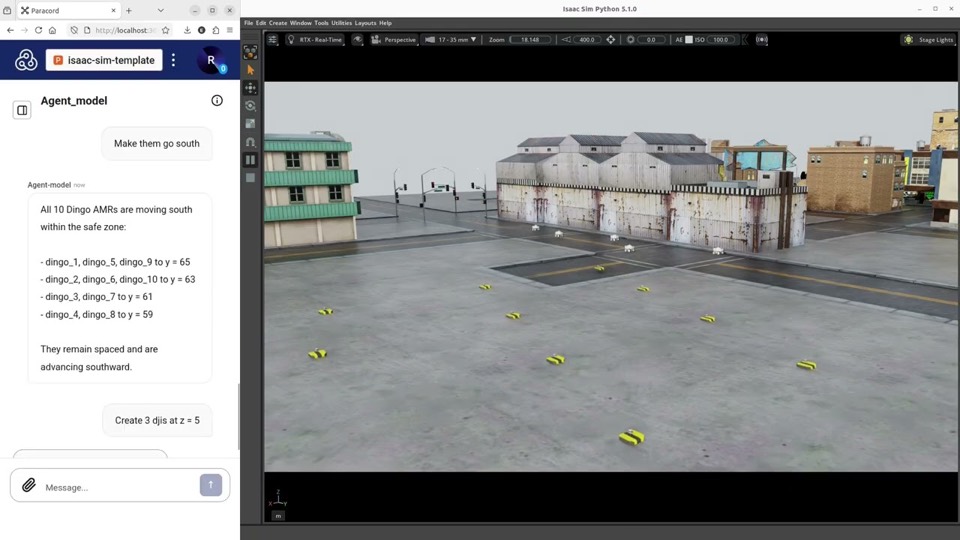
Agentic scenario running with NVIDIA Omniverse
The network runs scenarios inside a digital twin, so a plan is exercised end to end before it reaches real equipment.
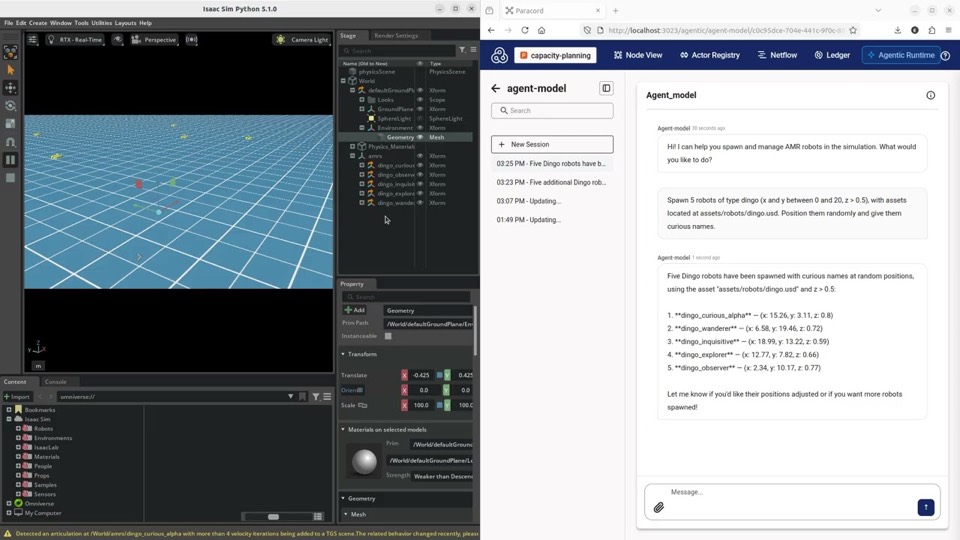
Agentic AI drives scenario creation
Describe the situation and agentic AI builds the scenario in NVIDIA Omniverse — the space, the machines and the tasks — ready to run.
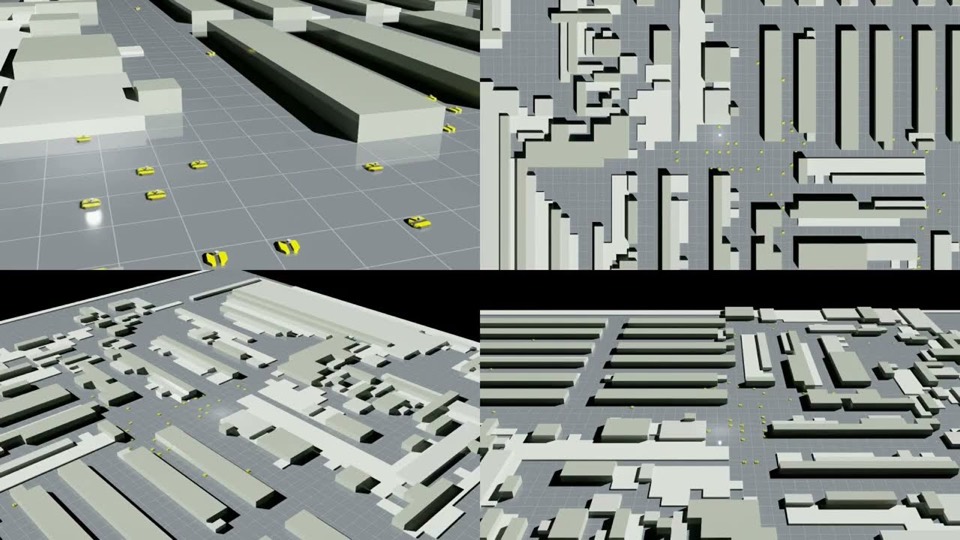
50 robots with look-ahead planning
Fifty simulated robots plan ahead to stay out of each other’s way. How many robots does a facility really need? Why guess — run the scenario.
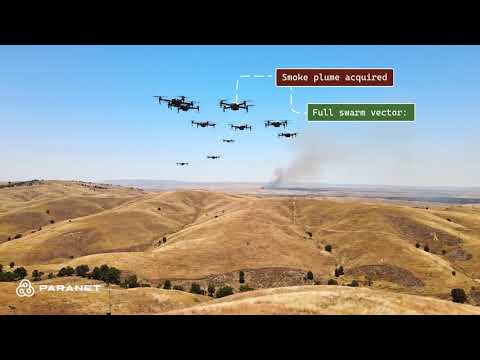
Dynamic goal trees: drone fire suppression
As new fires appear, the goal tree changes and the drone team re-plans on the fly, splitting up to tackle several blazes at once.
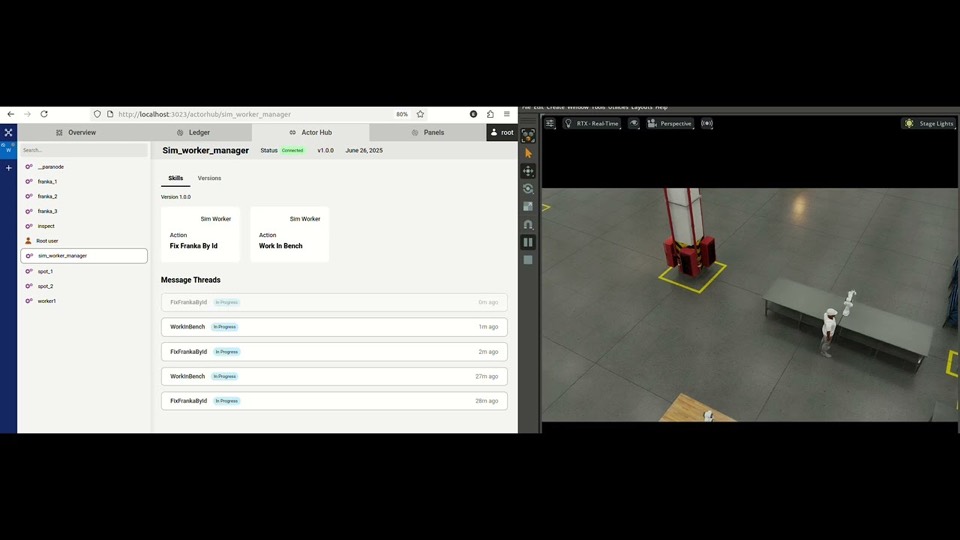
Simulating human response to a robot malfunction
A robot fails mid-task in NVIDIA Omniverse, and the simulation includes how the people nearby respond — because people are actors on the plan too.
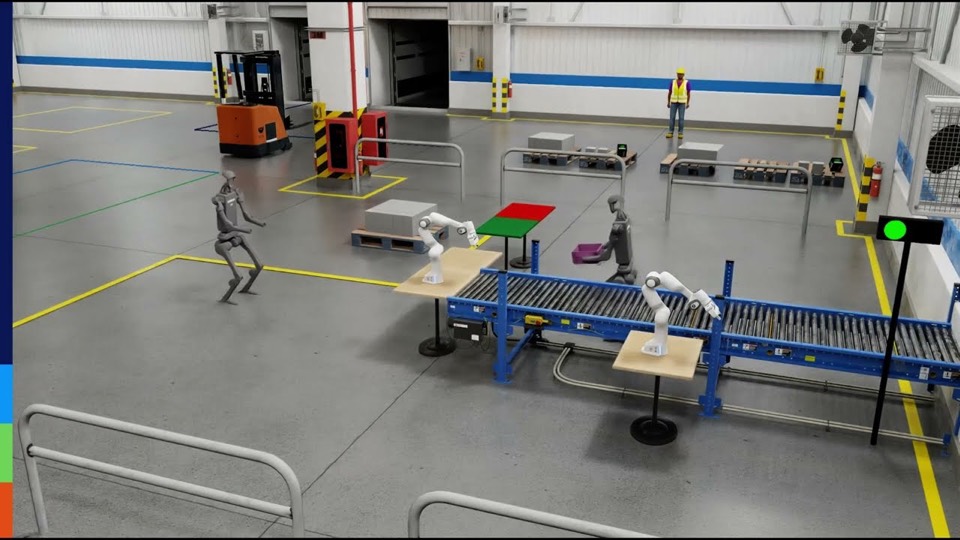
Bridging information technology (IT) and operational technology (OT)
Warehouse robots in NVIDIA Isaac Sim take their work from business systems through the network, closing the IT–OT gap on the warehouse floor.
The problem
Robots from different vendors don’t work as one team.
Each fleet arrives with its own controller, its own software and its own map of the world. Getting them to cooperate — with each other, with the people on the floor, and with the business systems that decide what should happen — is still bespoke work, facility by facility.
Vendor siloing
Robots, drones and automated equipment from different manufacturers can’t share a plan, so every mixed fleet becomes a custom integration.
Multi-use and humanoid robots
As robots take on many jobs instead of one, the hard part moves from controlling a machine to coordinating many machines across changing work.
Coordination at scale, amid change
Plans break when a robot fails, an order changes or a person steps in. The fleet has to re-plan together, safely, without a rewrite.
How it works
From intent, to tasks across many machines, to human supervision.
You say what needs to happen. The network turns it into tasks for the right machines and people, runs them, and keeps a person in charge of the calls that need one.
Design in simulation
Build and test the workflow in a digital twin, such as NVIDIA Omniverse, before it touches the floor. Try the edge cases there.
Plan
Intent becomes a plan across many machines. The plan is generated before execution, so it can be seen and validated up front.
Operate
Robots, drones, people and software carry out their parts. When something changes, the plan adapts; the judgment calls go to a person.
Learn
Every run and every human decision is recorded, and feeds the next version of the workflow — back in simulation first.
Under the hood
Actors can be software, hardware or human.
On the intelligent network, every participant is an actor with skills it offers to the others. A warehouse robot, a drone, a scheduling system and a floor supervisor are all actors on the same plan. That is what ends vendor siloing: the network doesn’t care who made the machine, only what it can do.
- Work is matched, not wired. A request can go to a persona — a pool of actors able to do the job — and the network picks one by availability, cost or time.
- You see the plan before it runs. Plans are generated before execution, so they can be inspected and validated up front, then executed the same way every time.
- It survives failures. Each node keeps persistent state and its own ledger, so work carries on when a node goes offline.
- Humans in the loop, by design. People are actors too. Approvals, overrides and hand-offs are part of the plan, not an afterthought.
Brownfield first
Overlay the robots and systems you already run.
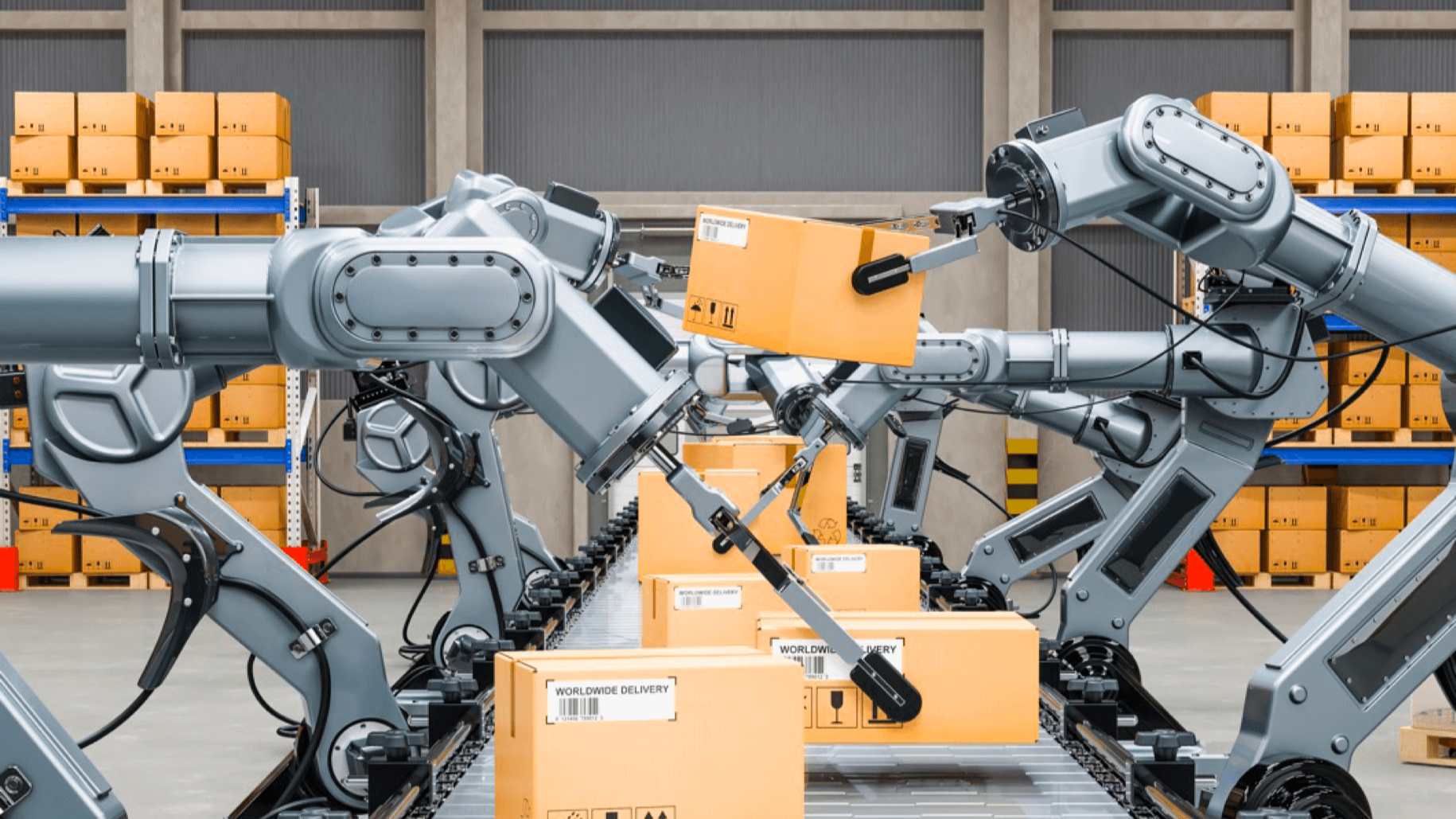
No rip-and-replace. The network sits on top of existing infrastructure — the robots, the people and the legacy software — and coordinates across them.
- Multi-vendor fleets. Robots from different manufacturers work to one plan.
- Simulation-ready. Workflows are tested in a digital twin with NVIDIA Omniverse and Isaac Sim before deployment.
- Built for the edge. The node is written in Rust, has a small footprint and runs on constrained hardware. After a reset it resumes where it left off.
Robotics in travel
Robots are part of the trip, too.
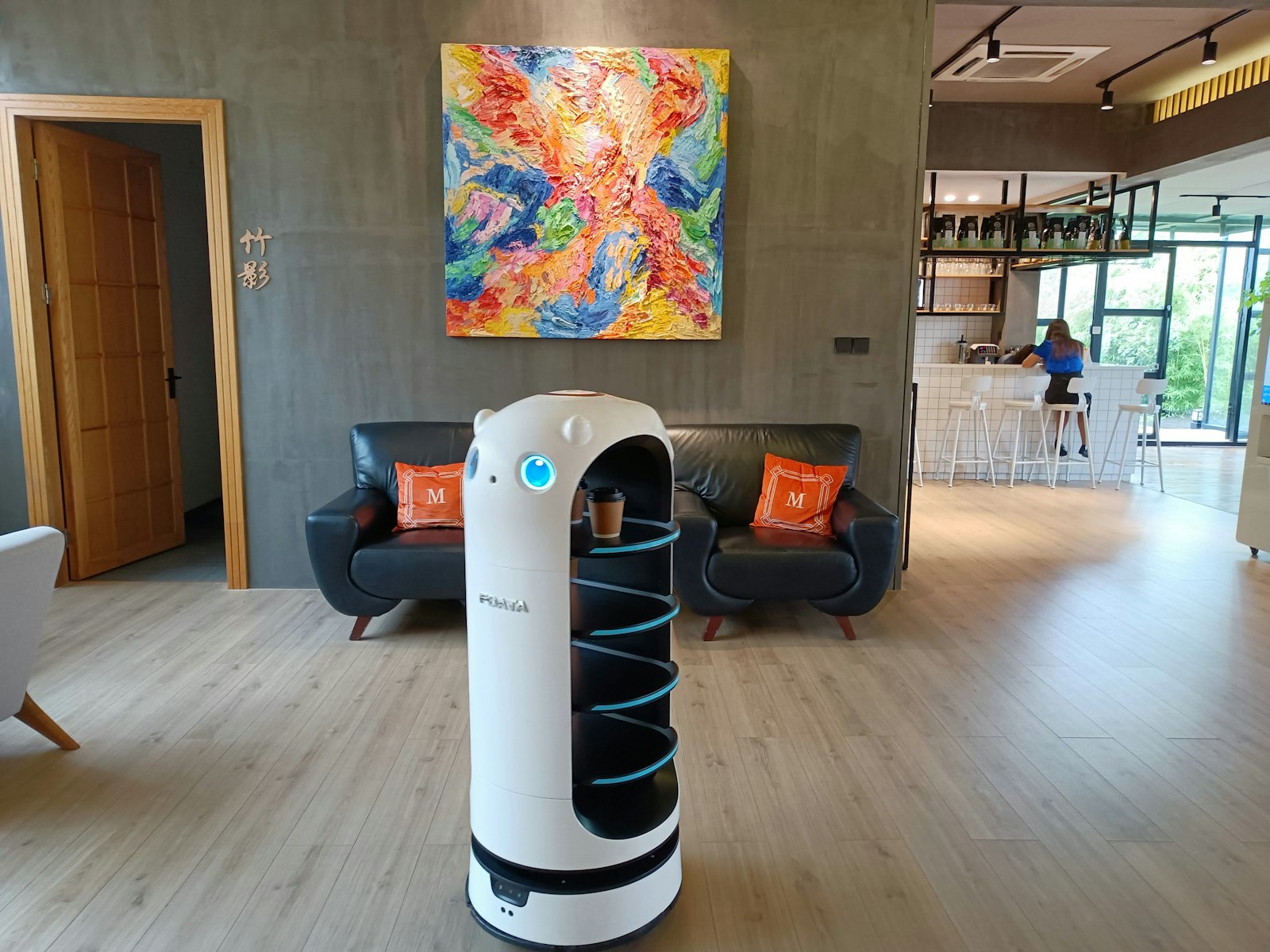
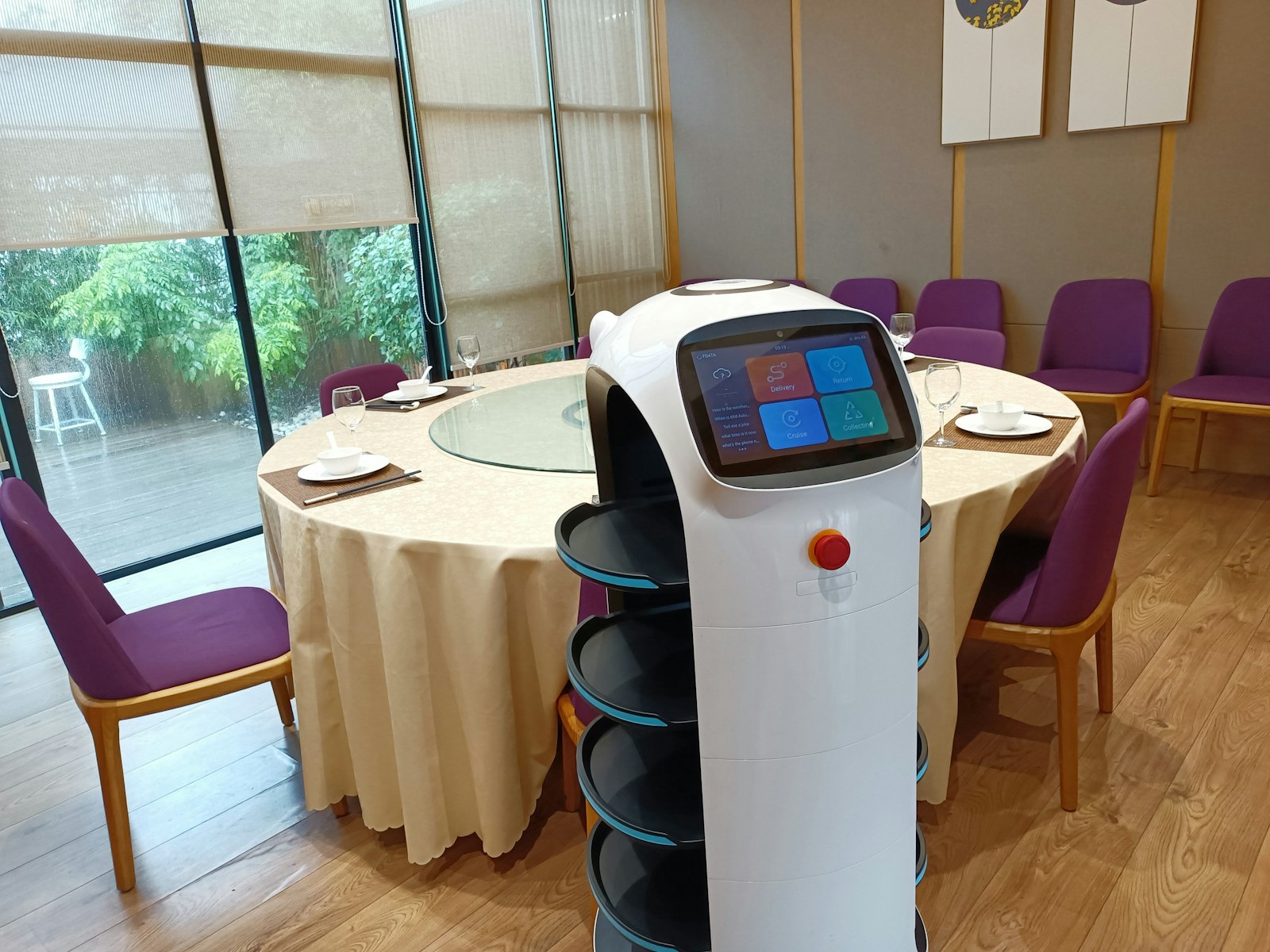
Hotels, airports and venues already run service robots for delivery, cleaning and baggage. On their own they are one more system that doesn’t talk to the others. On the network, a robot is simply another actor — on the same plan as the flight, the car and the front desk.
So when a guest’s flight is 90 minutes late, the towels and the late supper arrive when she does, not when the original booking said.
- Hotels. Room deliveries and housekeeping robots timed to the real arrival.
- Airports. Baggage and cleaning fleets that re-plan with the departures board.
- Venues. In-seat delivery that follows the fan to a new seat.
Travel is first. It is not the market.
The network that re-plans a trip when a flight is late is the same one that coordinates a mixed fleet on a factory floor. Travel is where we are building actors first; the platform underneath is the same everywhere.
Other use cases → · Build on the network → · Travel & Hospitality →
Put your fleet on one plan — and test it in simulation before it touches the floor.
We are working with a small number of partners to build it. Several prototypes are in operation today.